What you're looking at
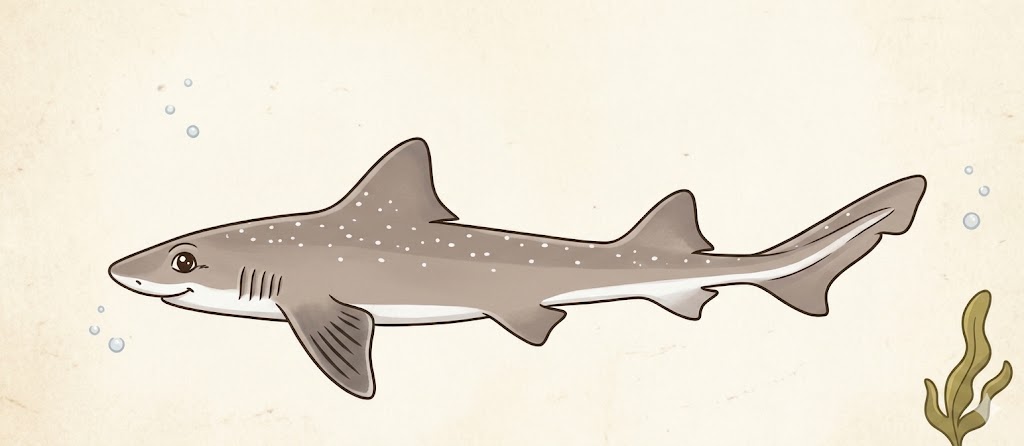
The smooth hound (Mustelus mustelus) is a small coastal shark with a slender, streamlined body. It is not to be confused with the starry smooth hound (Mustelus asterias), which is covered in white spots. The plain smooth hound has an unmarked grey-brown back fading to a pale white belly.
Key features
- Body: Slender and shark-like, tapering to a forked tail. Typically 60–120 cm, up to 150 cm in large females.
- Dorsal fins: Two dorsal fins, neither has a spine, a key difference from dogfish species.
- Snout: Moderately long and pointed. The underside of the snout has small sensory pores (ampullae of Lorenzini).
- Eyes: Oval with a horizontal cat-like pupil. Nictitating membrane (inner eyelid) visible when touched.
- Teeth: Small, flat, and pavement-like, adapted for crushing crabs and lobsters, not cutting. Safe to handle the open mouth.
- Gill slits: Five on each side, just ahead of the pectoral fins.
- Colour: Plain grey or brownish-grey above, white below. No spots.
Confusion species
- Starry smooth hound: Looks identical but has white spots scattered across the back. Both species often school together.
- Tope (Galeorhinus galeus): Much larger (up to 180 cm), pointed first dorsal fin, notched upper caudal lobe. Lacks the flat crushing teeth.
- Lesser spotted dogfish: Obvious spots, rough sandpaper skin, much smaller. First dorsal fin originates well behind the pelvic fins.
Where to find them
Smooth hounds favour sandy and mixed ground, particularly around shellfish beds in estuaries and inshore bays. They are most active at night and during flood tides. Common from late spring to early autumn around the UK coastline. Frequently caught from beaches and marks with access to sandbanks.